

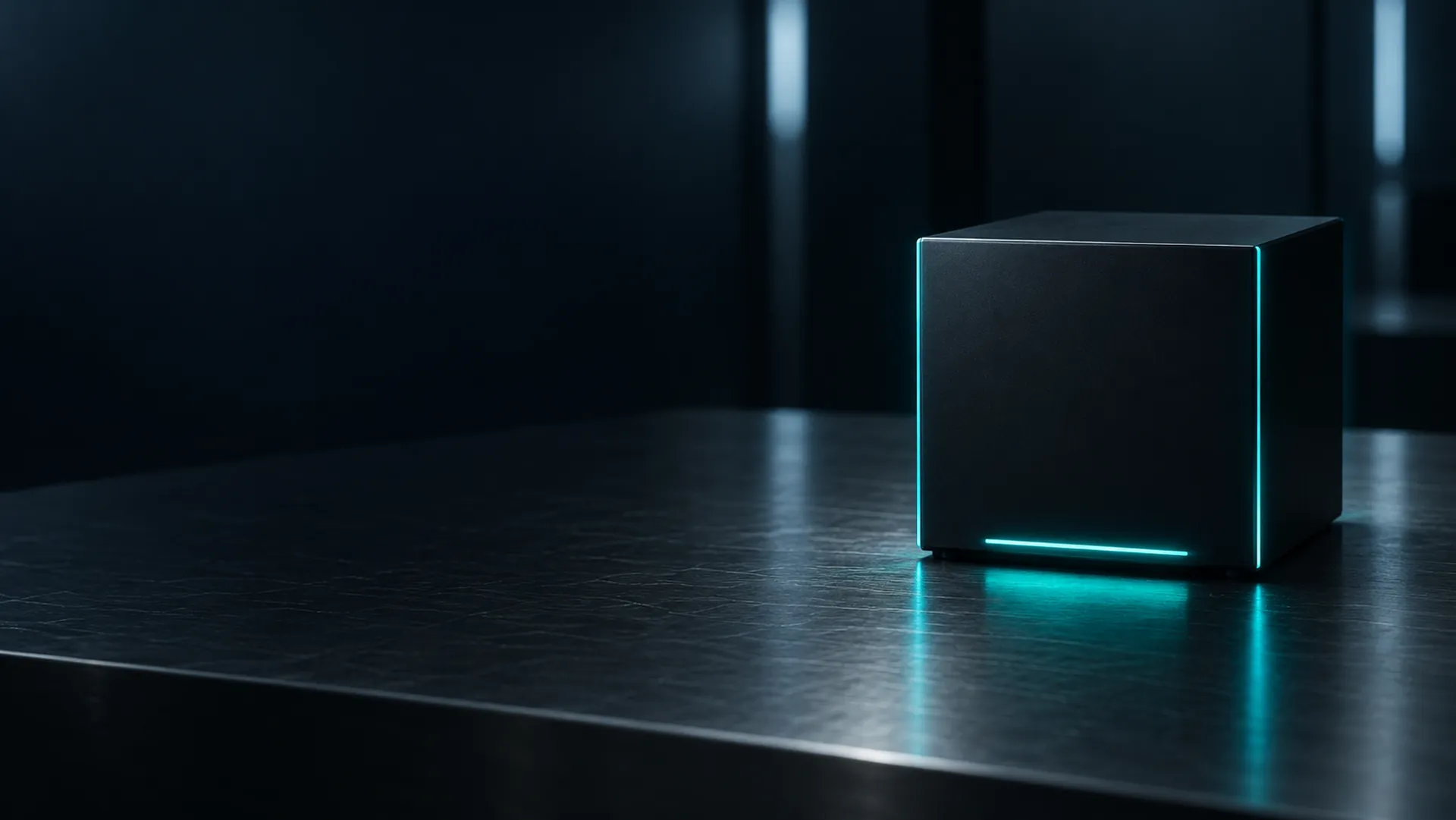
The Black Box
A network the internet cannot see.
0
Public IP addresses
There is nothing on the internet to scan.
0
Ports that answer a scan
No port responds until a cryptographic identity is presented.
0
VPN gateways
Every connection is made outward, through verified identity tunnels.
1
Sealed unit
The entire private network lives in one box.
How it is built
Four layers. One sealed unit.
- 04
Self-Heal Engine
Watches every service and fixes failures in order, logging each action with CMMC and NIST 800-53 control mappings.
- 03
Identity mesh
Cryptographic identity for every participant, outbound-only connections, and no port that answers until an identity is verified.
- 02
Hardened core
FIPS 140-3 validated cryptography at the kernel and DISA STIG hardening applied at deployment.
- 01
Sealed unit
One self-contained box that holds the whole private network. If it is not inside the boundary, it is not on the network.
Side by side
Hardened is not the same as dark.
Traditional security restricts access to ports that are already visible and listening. The Black Box removes the visibility itself, then verifies every connection that remains.
- Public IP addresses
- Conventional: Exposed and scannable
- The Black Box: None
- Open ports
- Conventional: Listening, behind firewall rules
- The Black Box: None answer until an identity is verified
- Remote access
- Conventional: A VPN gateway waiting to be exploited
- The Black Box: Outbound, identity-verified tunnels
- Who gets in
- Conventional: Whoever is on the right subnet
- The Black Box: Only verified identities, per connection
- Post-quantum
- Conventional: A future migration project
- The Black Box: Architecture designed for PQC algorithm substitution
- Hardening
- Conventional: Added after deployment
- The Black Box: FIPS 140-3 and DISA STIG from first boot
- When something breaks
- Conventional: A ticket and a wait
- The Black Box: Self-Heal Engine repairs and logs it
- Audit evidence
- Conventional: Assembled by hand before the assessment
- The Black Box: Logged with CMMC and NIST 800-53 mappings
Who it is for
For work that cannot live on someone else's network.
- Federal contractors
- DoD program offices and Combat Systems requiring FIPS 140-3 and DISA STIG compliance
- Healthcare organizations requiring zero-exposure infrastructure for PHI workloads
Questions
What people ask first.
Is this just a VPN?
No. A VPN puts a gateway on the public internet and trusts whoever authenticates through it. The Black Box has no public IP address, and no port responds until a cryptographic identity is presented, so there is no gateway to find. Every connection inside it is tied to a verified cryptographic identity and authorized by policy.
What does off-grid mean in practice?
The network does not depend on the public internet, a cloud provider or anyone else's infrastructure to run. The people and devices you enroll can reach each other. Nobody else can see that it exists.
How does it help with CMMC?
FIPS 140-3 validated cryptography and DISA STIG hardening are in place from the first boot, and every Self-Heal action is logged with CMMC and NIST 800-53 control mappings. Pair it with Sovereign GRC™ and the evidence flows straight into your SSP and POA&M.
Is it ready for post-quantum cryptography?
The architecture is designed for post-quantum cryptographic algorithm substitution, and FIPS 140-3 validated cryptography runs at the kernel level from the first boot.
Who builds and supports it?
Intel Cyber Solutions, a U.S. owned company in Gainesville, Virginia. It is designed and built in the United States on U.S.-controlled infrastructure, and you talk directly to the engineers who built it.

Request a briefing
See The Black Box for your program.
Inquiries go straight to Nelson Estrada, Managing Partner, with a response within one business day. We are cleared for CUI discussions under NDA; for controlled unclassified inquiries, name your program in the message.